
You had the gutters cleaned, but the next rain sends water over the edge again. It's frustrating, especially when you thought the job was taken care of.
Before booking another cleaning or replacing the gutters, find out what was checked and where the water is escaping. The gutter itself may be clear while the downspout, supporting brackets, or roof edge still needs attention. You don't need to work out the cause yourself, but a few observations can help you explain what's happening.
Start With What You Can See From the Ground
Once the weather has passed, look for a gutter that dips in one spot, a disconnected downspout, staining on the board behind the gutter, or water collecting beside the house. Stay clear of anything loose or hanging, and don't climb a ladder or go onto the roof to investigate.
If you can see the spill safely from indoors, notice where it starts. Is water coming over the front edge, dripping from a corner, or running down behind the gutter? Those details are useful when you ask for help, even if you can't see what's happening inside.
Leave outdoor checks for later during severe thunderstorms. The National Weather Service advises going inside a sturdy building when severe thunderstorms approach.

Ask What Was Included in the Cleaning
A cleaning may have removed the leaves you could see without checking the rest of the drainage path. Before paying for the same work again, ask whoever did the job whether they checked the outlets, elbows, and downspouts as well as the open gutter channels.
It's also worth asking whether they noticed standing water, loose attachments, or leaking joints. Photos or notes from the visit can help. If a downspout connects to a buried pipe, find out whether that connection was included. The underground drain may need a separate assessment.
If a blockage is found, clearing it may be the first step. But if water keeps spilling after the drainage path has been checked, the next step is to look beyond debris.
If Water Spills Over the Front Edge
Clean gutters still need to drain toward their outlets and handle the water coming off the roof. The Building America Solution Center's gutter guidance explains that the gutter's slope, its capacity, and the downspouts all matter. A larger gutter won't necessarily help if the downspouts can't carry the water away.
Tell the person checking the gutters whether the spill happens in ordinary rain or only in a heavier downpour. That helps describe the problem, but it doesn't prove you need a larger system.
A section that sits lower than the rest also deserves a closer look. Its attachments, alignment, or supporting material may need work. Whether it can be adjusted or needs replacement depends on what the inspection finds. Adding sealant won't hold up a loose gutter.
If Water Runs Behind the Gutter
The board behind the gutter is called the fascia. Water running down that board is a reason to check how the roof edge and gutter meet, rather than simply filling the visible gap with caulk.
Metal flashing called drip edge helps direct water outward at the roof edge. GAF's drip-edge bulletin explains how it helps keep water away from the soffit edge and siding and directs runoff into the gutter. Its installation details are for GAF shingle systems, so the repair needs to suit your actual roof.
Ask whether water is missing the gutter, overflowing it, or getting past a roof-edge detail. Roofing or flashing work may need a roofing professional.
If the fascia or nearby trim looks deteriorated, point that out too. Reattaching the gutter won't repair damaged material behind it. Both parts of the job need to be considered before everything is covered and painted.
Follow the Water Beyond the Downspout
Sometimes the gutter collects water properly, but the trouble starts where the downspout ends. After rain, check from a safe position for a disconnected extension or water pooling beside the wall.
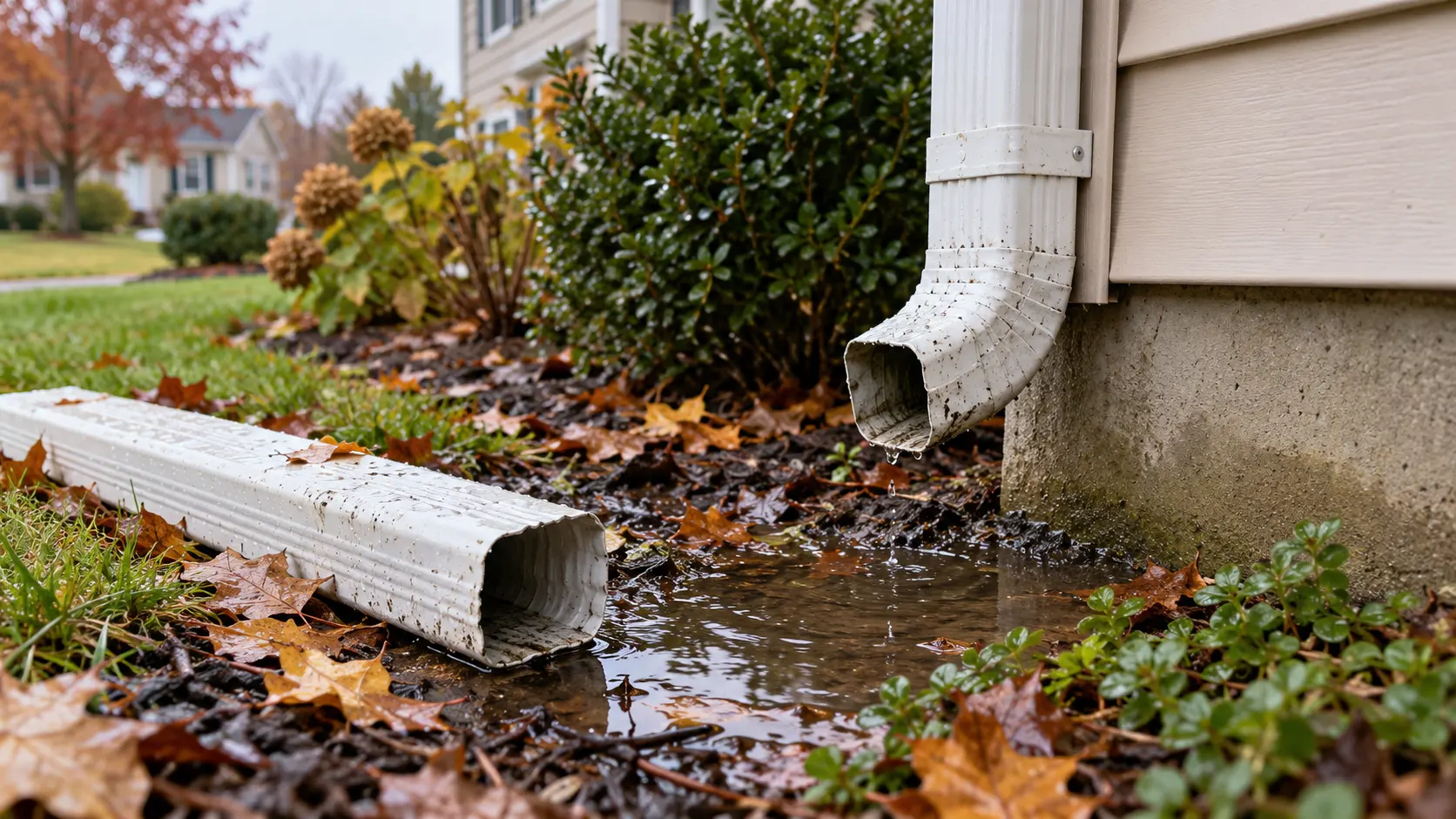
The Building America guidance emphasizes carrying roof water away from the foundation to a suitable discharge point. If yours drains into a buried pipe, mention that when arranging an inspection. Changing the gutter won't necessarily fix a blocked drain or ground that sends water back toward the house.
If you've noticed dampness indoors, mention it, but don't assume the gutter explains it. A basement leak or ceiling stain needs its source checked. The EPA's moisture guide recommends maintaining gutters and keeping ground drainage away from the foundation. It also advises fixing water problems and cleaning and drying moldy surfaces before painting or caulking. Get help from an experienced professional if you suspect hidden mold.
Our ceiling water-stain guide explains the finish-repair options once the source is addressed.
Do You Need a Repair or Replacement?
One leaking joint or loose section doesn't automatically mean replacing every gutter on the house. Start by asking what has failed and whether a repair can address it.
Some small leaks may suit a compatible gutter sealant. GE's gutter-repair guidance covers joint sealing, surface preparation, and curing, and notes that sealant does little as a structural component. The product needs to suit the gutter material, and its preparation and curing instructions need to be followed. Don't assume leftover trim caulk will do the job.
Replacement may make sense where the channel is extensively damaged or an assessment finds the existing arrangement can't handle the job. Ask the contractor to explain what they found and whether the recommendation covers one section or the whole system.
Before agreeing to the work, make sure you understand what the repair includes, whether any fascia or downspout work is separate, and how drainage will be checked afterward. If roofing, buried drainage, or hidden damage needs another specialist, that should be clear too.
Need Help With Your Gutters?
Tell us where the water spills, when it happens, and what work has already been done. A few photos taken safely from the ground can help us understand the area.
Melvin's Handyman Services helps homeowners in Fredericksburg, Woodbridge, and nearby communities with gutter repair and replacement, fascia work, and related home repairs. Send us an estimate request with up to five optional photos, and we can review the details with you. If the problem needs a roofing or drainage specialist, that may be a separate part of getting it resolved.