
You may still be able to paint or caulk outside in Northern Virginia this fall, but a warm afternoon isn't enough to decide. The surface needs to be dry and sound, and the conditions need to meet every product's instructions during application and for the required time afterward. If rain, frost, or cold would arrive too soon for those instructions, wait for a better window.
That can be an awkward call when you've been meaning to finish the door trim or replace a split caulk joint before winter. Start with the condition of that particular area and the materials it needs. A small touch-up and a repair involving new trim, sealant, primer, and two coats of paint have different schedules.
Start With the Forecast for Your Home
There isn't one last painting date that works for every home in Woodbridge, Fredericksburg, and nearby communities. NOAA's explanation of first fall freezes describes historical dates as generalizations and explains how elevation, nearby water, and development affect when freezing conditions arrive. A historical average isn't a forecast for the day you want to work.
Check the forecast for your address, including overnight lows and the chance of rain. Then look beyond the hours when someone will have a brush or caulk gun in hand. The important question is whether the materials will have suitable conditions for the application and drying periods their manufacturers require.
If you're arranging the work, ask what would cause it to be postponed. That conversation is more useful than assuming a scheduled date guarantees suitable weather.
How Cold Is Too Cold for Exterior Paint or Caulk?
The minimum temperature depends on the exact product. Check its label and current technical data sheet, which gives more detailed instructions. The paint, primer, and sealant can have different limits, so one product's cold-weather rating doesn't approve the whole job.
For example, Benjamin Moore's Element Guard Exterior Flat Finish 763 sheet permits application down to 35°F for both air and surface temperature. That is an instruction for that paint, not a rule for all exterior paints or primers. It also notes that cool temperatures and high humidity lengthen drying and recoating times.
The September 2026 DAP EXTREME STRETCH colors sheet gives a different set of conditions: apply above 40°F, and don't apply when rain or freezing temperatures are forecast within 24 hours. Those instructions cover the white and other colored sealants listed in that sheet; the clear version has separate instructions.
You don't need to buy either product to use this approach. Write down the full names of the materials proposed for your repair and check each set of instructions. If you're still choosing a sealant, our silicone versus acrylic latex caulk guide explains the material, paintability, and joint questions to settle first.
Check the Surface After Morning Dew
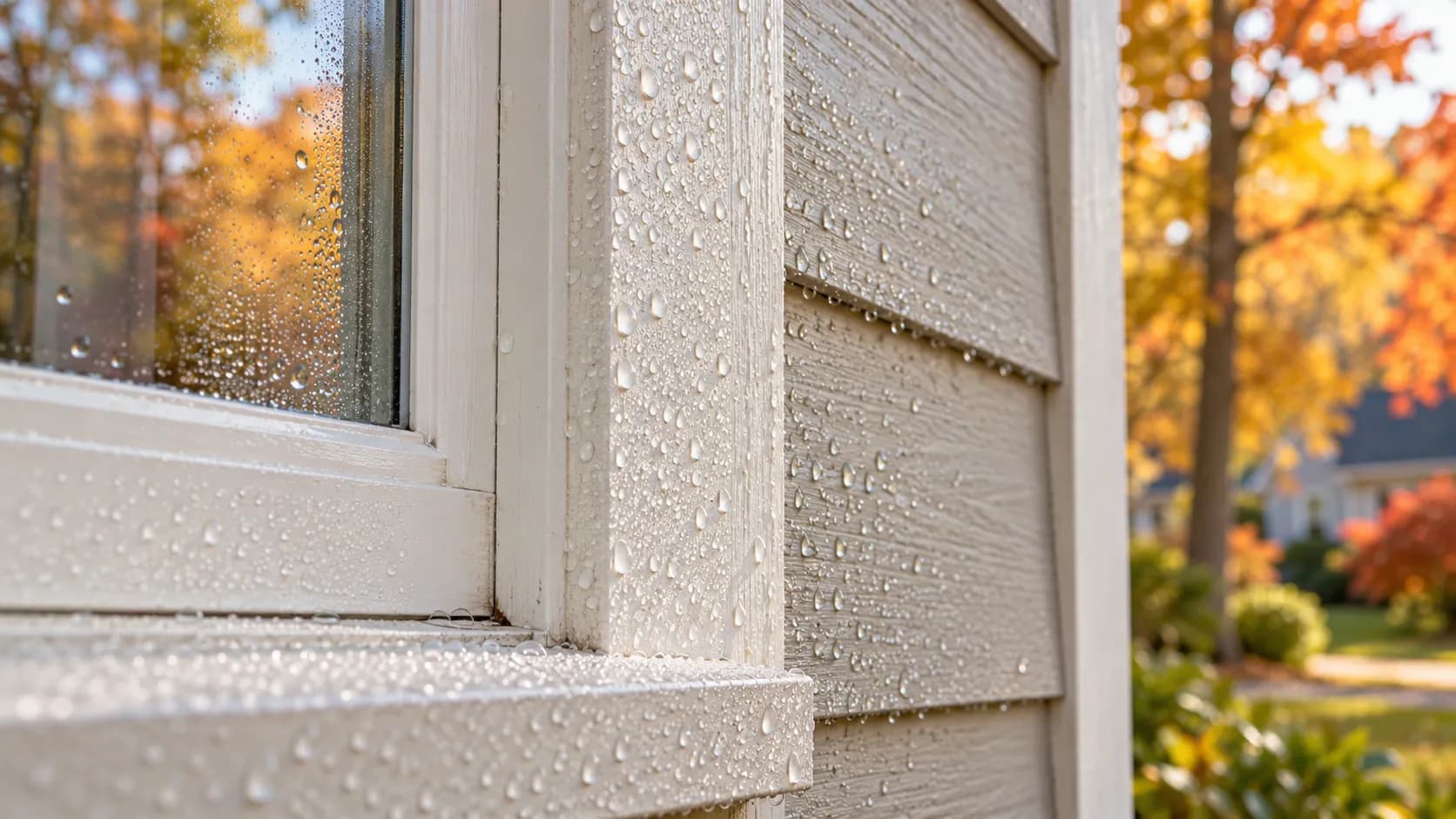
A dry forecast doesn't necessarily mean the trim is ready. Dew can leave moisture on the surface, and a shaded area can be a different temperature from the air around it. Benjamin Moore's temperature guidance explains that surface temperature, humidity, and condensation matter alongside the air temperature. It recommends measuring the surface with an infrared thermometer when its temperature is in question.
Look for dampness on the actual area being coated, including the joint that needs caulk. Both the paint and sealant instructions above call for clean, dry surfaces. A dry-looking patch beside a wet joint doesn't mean the whole repair area is ready.
If the morning starts damp, don't assume the job can begin at a particular hour. Allow the area to dry, then confirm that the remaining conditions and time still suit the products. Check again before work starts, especially if the area is still shaded.
Give Caulk, Primer, and Paint Their Own Time
It helps to think through the whole job before opening anything. Preparation, caulking, priming where needed, and finish coats each take time, and the sequence needs to suit the materials and surface.
Paint-ready, ready for rain, and fully cured mean different things. DAP's colors sheet says to wait at least two hours before painting over EXTREME STRETCH, with more time in cool or humid conditions. That doesn't cancel its restriction on rain or freezing temperatures within 24 hours. Painting over a bead doesn't remove the sealant's need for suitable weather.
Here's a hypothetical example. You plan to caulk exterior door trim on a 58°F afternoon, but the forecast shows 31°F overnight and rain the next morning. If you're using the DAP colored sealant described above, postpone that application: freezing weather and rain are forecast inside its restricted period. A paint that allows lower application temperatures doesn't change the caulk's instructions.
Allow for the paint's recoating requirements too. Element Guard 763 lists four hours before recoating at 77°F and 50% relative humidity, while noting that cooler or more humid conditions extend that time. Don't use a drying time measured under those conditions as a promise for a cool fall day. A later coat still needs its own suitable window.
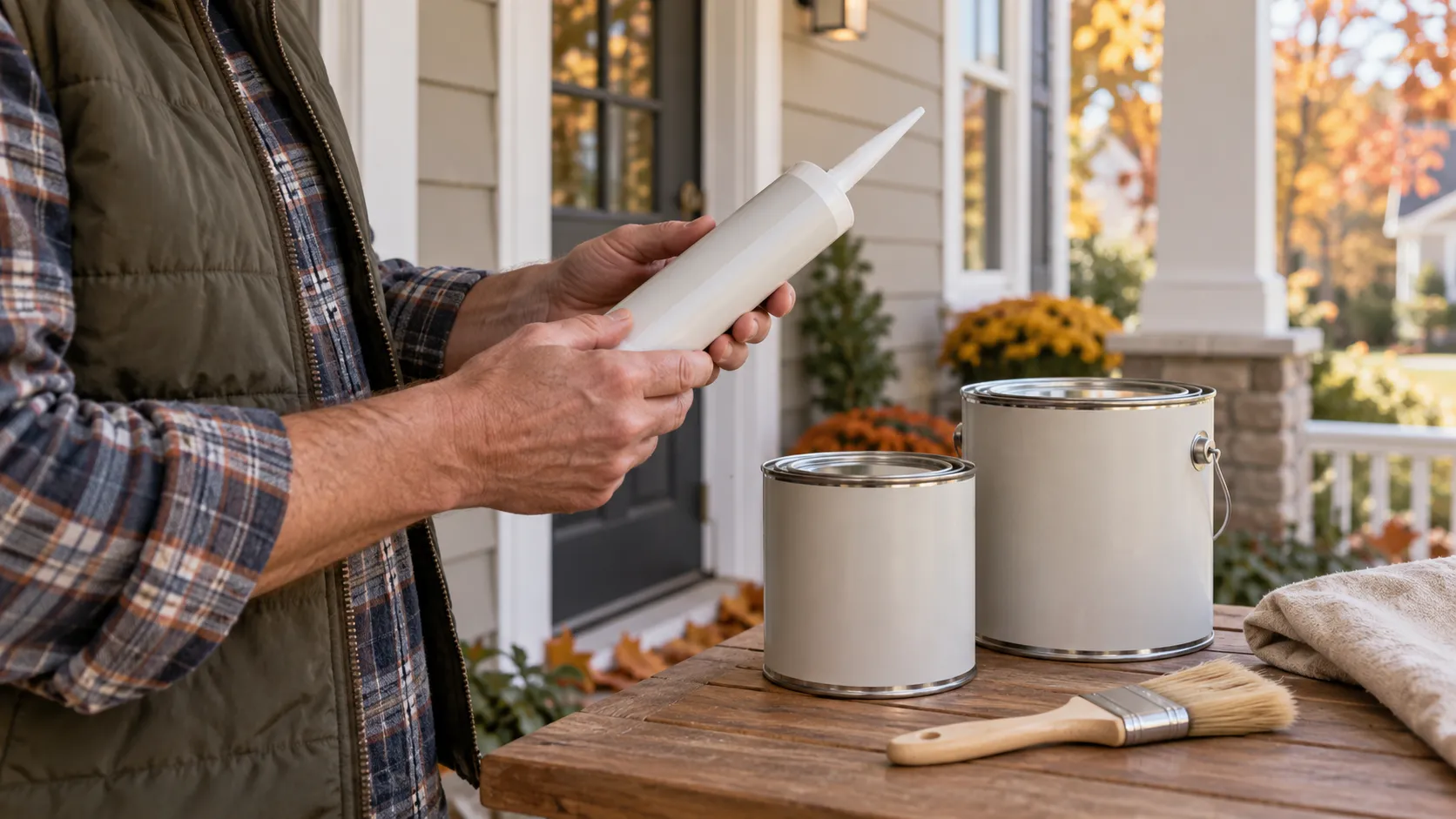
For a small exterior trim job, ask:
- Which sealant, primer, and paint will be used on this surface?
- What preparation and drying are needed before the first application?
- How much time is needed between materials and coats in the expected conditions?
- What rain or temperature change would make us stop or reschedule?
Those questions help turn “we'll get it done before winter” into a plan you can understand.
When to Pause the Finish Work
Weather isn't the only reason to hold off. The DAP sheet calls for a structurally sound surface as well as a clean, dry one. If the trim looks swollen, crumbling, or repeatedly stained, arrange an assessment before covering it. A fresh finish won't resolve damaged trim or the source of a leak.
Recurring leaks or a joint that keeps opening also deserve a closer look. Our door and window repair guide explains when a local finish repair may be enough and when the surrounding opening needs investigation. Identify the joint before sealing it; the guide also covers drainage openings that need to stay clear.
Be careful with preparation in older homes. In a pre-1978 home, sanding or scraping painted trim may disturb lead-based paint and create dangerous dust. EPA recommends lead-safe certified help for renovation work in these homes. Check the home's age and discuss testing and appropriate work practices before disturbing old paint. Don't assume a contractor holds that certification without checking.
If conditions won't support the coating job, you can still take photos from safe ground-level access, note where water or damage appears, and ask what needs attention first. An active leak shouldn't simply be left until spring because painting has to wait. Have the cause assessed and discuss how any exposed repair should be protected while the finish work is scheduled.
Need Help With an Exterior Repair This Fall?
Melvin's Handyman Services reviews exterior painting and prep, caulking, and trim repairs in Fredericksburg, Woodbridge, and nearby communities. Send us the details and photos, and we'll review the scope and timing with you.