
Choose luxury vinyl plank (LVP) for basements, bathrooms, kitchens, and laundry rooms, where spills or slab moisture are the bigger worry. Choose laminate for dry living areas and bedrooms if you want a firmer, more scratch-resistant surface. Either floor can fail early if the subfloor is uneven or the manufacturer's installation steps are skipped.
Both are floating floors with click-lock edges, so they look similar on a showroom shelf. What separates them in a real house is how they handle water, what the floor underneath looks like, and how much wear the room gets.
LVP vs. Laminate at a Glance
Use this table to narrow your choice, then confirm the details on the product's installation instructions.
| Question | Luxury vinyl plank (LVP) | Laminate |
|---|---|---|
| Best rooms | Basements, bathrooms, kitchens, laundry rooms | Living rooms, bedrooms, hallways, offices |
| Water exposure | Waterproof planks; the core will not swell from spills | Water-resistant surface; the fiberboard core can swell if water gets into seams |
| Over a concrete slab | Follow the product's moisture instructions, often a poly barrier | Follow the product's moisture instructions, often a poly barrier |
| Subfloor flatness | Typically 3/16 inch over 10 feet, or 1/8 inch over 6 feet | Typically 3/16 inch over 10 feet, or 1/8 inch over 6 feet |
| Underlayment | Use the attached pad; do not add another | Use the attached pad or the approved underlayment, not both |
| Scratches and pets | Resists scuffs; heavy furniture and grit can still mark it | Hard surface; higher AC ratings hold up better to claws and grit |
The North American Laminate Flooring Association, Shaw's resilient flooring guidelines, and Pergo's installation instructions are good places to check the rules behind these choices. Product instructions vary, so your carton and manufacturer sheet win over any general rule here.
Water and Moisture: Why Basements Lean Toward LVP
Rigid-core LVP is made from vinyl and mineral filler, with no wood fibers. If a washing machine hose lets go or a pet has an accident, the planks themselves will not swell or soften.
Laminate has a wood-fiber core under a tough printed surface. Its tight seams handle everyday spills, but if water sits long enough to get between planks, the core can swell, and swollen edges rarely settle back flat.
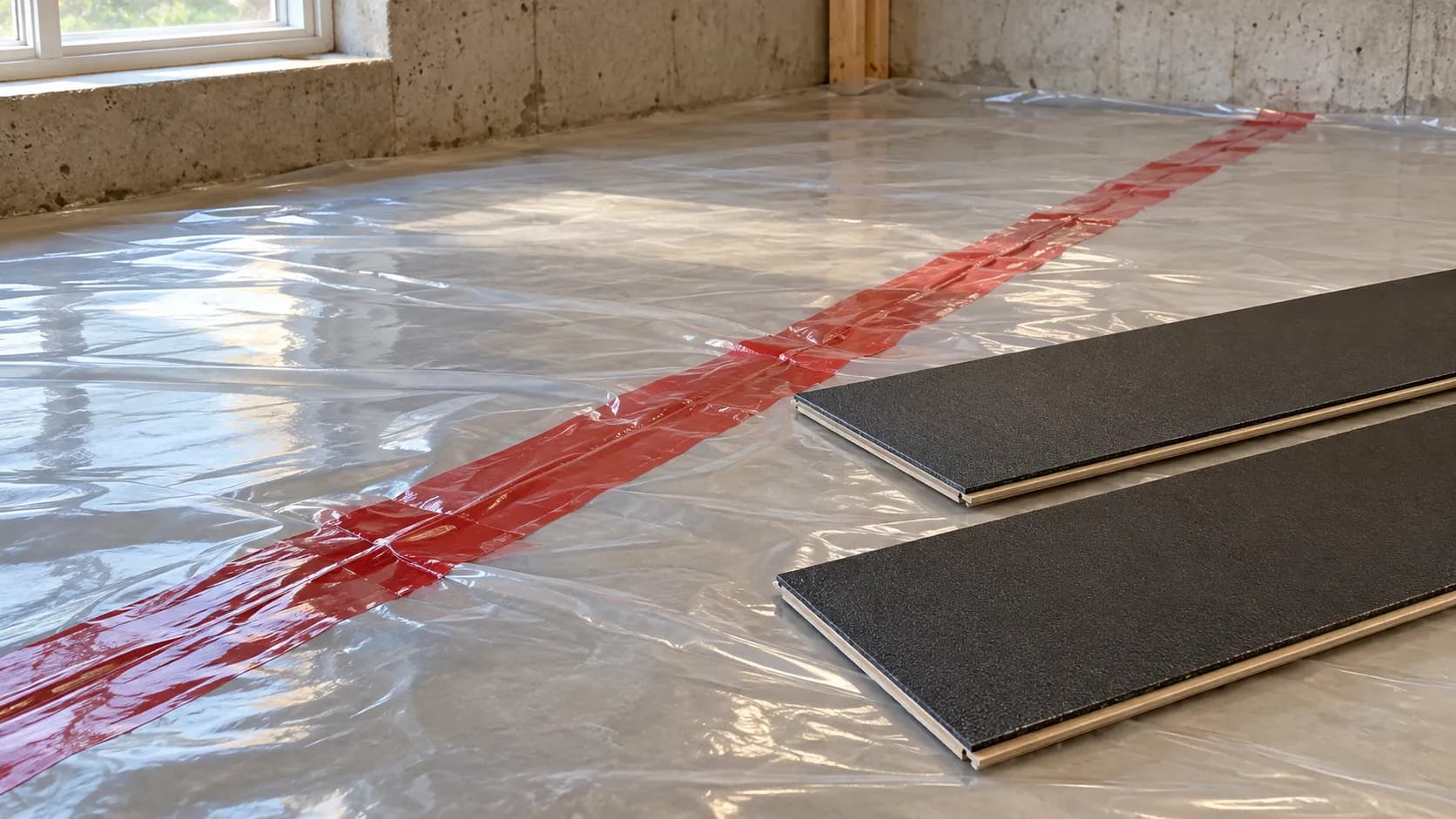
Basement slabs add a second problem. Concrete is porous, and moisture vapor can move up through it even when the floor feels dry. A waterproof plank does not stop that vapor, so it can collect under the flooring and cause odors or mold. That is why manufacturers commonly call for a polyethylene moisture barrier over concrete, and why Virginia Cooperative Extension stresses controlling moisture in homes. Pergo's laminate instructions, for example, call for 6-mil polyethylene over concrete with overlapped, taped seams. Check the instructions for your exact product, since some flooring comes with its own approved moisture protection.
If the basement has a history of dampness or standing water, solve that first. Our basement finishing permits guide covers planning questions to settle before finishing a below-grade space.
Subfloor Flatness: Where Click-Lock Floors Usually Fail
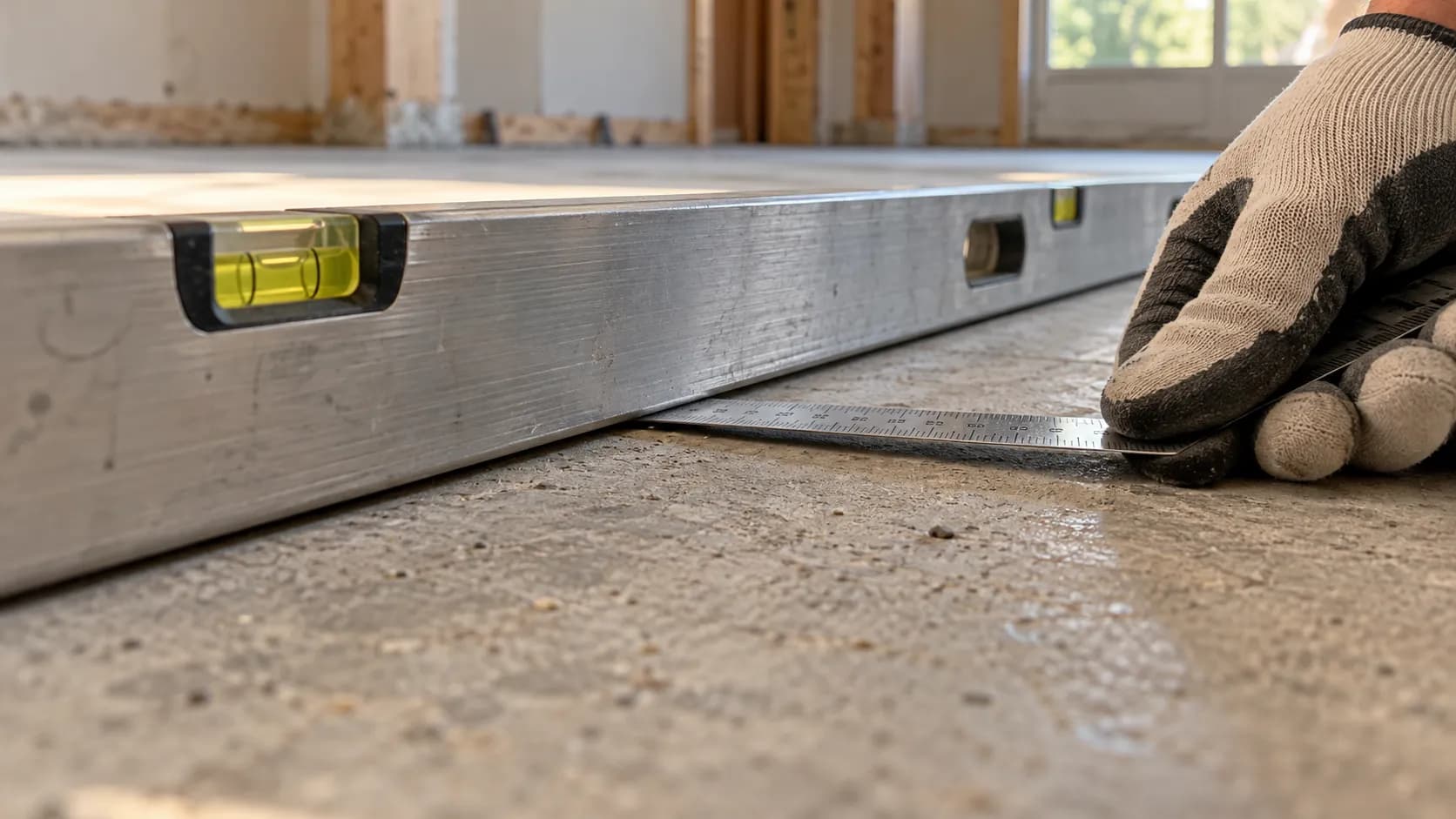
An uneven subfloor is one of the most common reasons a floating floor gives trouble. Shaw's resilient flooring guidelines and ASTM F710, the standard for preparing concrete floors for resilient flooring, use a flatness tolerance of 3/16 inch over 10 feet, or 1/8 inch over 6 feet. Many laminate instructions use similar numbers.
When a floor has a dip bigger than that, the planks flex every time someone walks over it. Over time that can loosen the locking edges, open seams, and cause hollow or clicking sounds. Padding will not fix it, because underlayment cannot bridge a real low spot.
To check your floor, lay a long straightedge across the room in several directions and slide a ruler under any gap. Concrete high spots usually need grinding, and low spots are typically filled with a leveling compound that suits the subfloor. On a wood subfloor, loose panels should be fastened down and raised seams sanded flat. If the floor is well outside tolerance, have it looked at before you buy flooring. Subfloor condition is one of the things we review during a flooring estimate.
Don't Double Up the Padding
Many LVP and laminate planks already have a pad attached to the back. If yours does, adding a second foam underlayment is usually a mistake. Extra cushion lets the planks sink and flex more than the locking edges were designed for, and many manufacturers say in their instructions that doing so can void the warranty.
If your planks have no attached pad, use only the underlayment the manufacturer specifies. The NALFA underlayment standard gives manufacturers a common way to test compression and other performance, which is one reason a thick, soft pad is not automatically better. A moisture barrier over concrete is a separate layer from a cushioning pad, so confirm in your instructions which layers are allowed together.
Scratches, Pets, and Everyday Wear
Laminate generally has the harder surface. NALFA's AC rating system measures laminate abrasion resistance, and higher ratings, such as AC4, suit heavier household traffic. If you have a large dog or a busy entry, that is worth looking for.
LVP wear layers are rated in mils, which are thousandths of an inch. A thicker wear layer generally resists scuffs and stains longer, but the number is not a promise, so compare the manufacturer's warranty terms rather than the number alone. LVP's softer surface can mark under heavy furniture without felt pads or when grit gets dragged across it.
Underfoot, laminate tends to feel firmer. LVP feels a little softer, though over a cold basement slab it can still feel cool.
Leave Room at the Edges
Floating floors expand and contract with temperature and humidity, so they need a gap around the room's perimeter. Pergo, for example, calls for at least a 3/8-inch gap at walls and fixed objects. Your product's number may differ, so check the instructions.
Baseboards or shoe molding cover that gap. They should be fastened to the wall, not through the planks, so the floor can still move. In doorways, undercutting the door casing lets planks slide underneath, and a transition strip finishes the joint where two floors meet. For help with trim and finish carpentry, see our home repair services.
Before You Buy or Ask for an Estimate
Run through these five questions first:
- How wet could this room get: a shower, laundry, or walkout door?
- What is under the floor, and is it flat and dry?
- Does the product already have a pad attached?
- How hard will this floor be used, and do you have large pets?
- Which baseboards, shoe molding, and transitions will be reused or replaced?
Clear photos of the current floor, doorways, and trim help us understand the scope.
Get Help With Your Flooring Project
Melvin's Handyman Services provides flooring installation and repair in Fredericksburg, Woodbridge, and nearby Virginia communities, along with baseboards, molding, and transitions. Flooring can also be part of a basement finishing project.
To ask about an estimate, use the contact page to describe the room, the subfloor, and the flooring you are considering. You can upload photos with your inquiry.